Jul 24, 2015 I prefer clearing my Mac from apps using special software made for this particular task - CleanMyMac X. It’s Uninstaller feature, is an app-killer that sweeps away any program you don’t want on your Mac and clears remaining junk. Now let’s go ahead and delete some apps! Uninstall Mac apps using Trash.
Removing programs from a Macintosh can be very easy. In many cases, all you have to do is drag the application's icon to the Trash. Sometimes, though, applications store the files they need to run in other locations on your computer's hard drive, and finding them can take some detective work. If you are used to the uninstall option in Windows, you have a little culture shock — macOS does not have this feature built in.
Why would you want to uninstall a program? For the same reason you occasionally tidy your office or clean your garage. Clutter breeds inefficiency. Py app for mac. Applications take up space on your hard disk and can slow your computer. Also, a new version of a program may not work correctly unless you get rid of the old one [source: Ritchie].
Advertisement
Advertisement
Most of the time, uninstalling is this simple:
- Exit the program you want to delete.
- Open the Applications folder, which you'll find by opening a new window in the Finder, or clicking on the hard disk icon.
- Drag the icon of the program you want to uninstall to the Trash.
- Empty the Trash.
When files for the application you want to delete are all stored in one location, dragging the icon to the Trash will take care of most of the work. In Mac talk, apps like this are 'bundled.' To see the files in an application's bundle, click on its icon while holding down the Control key. You should see an option that says, 'show package contents.' Uninstalling applications downloaded from the Mac App Store is even easier — just delete the application from the Applications Folder and its accompanying folder in UserLibraryContainers [source: Tanous].
For some other programs, removal is more complicated. When installed, these programs create files in several locations, often in the System Folder. The first step in removing them is to check the program's documentation to see if there is an uninstall utility. If your program has an uninstall utility associated with it, it may have been installed with the program or included on the disk that came with it. If you downloaded a disk image to install the software, sometimes you'll find an uninstaller there. Running an uninstall utility can make removing a program much easier.
You should be aware that removing an unbundled program by moving it into the Trash can leave behind orphan files on your computer. Preferencefiles are usually small and you might want to ignore them if you're just trying to free up disk space. Background files or support files can be larger, especially for multimedia programs like GarageBand [source: MacRumors]. These files are likely to reside in Library folders in your hard drive or Home folder. They will usually be labeled with the name of the program, like Office or Acrobat, or the developer, such as Microsoft or Adobe. You can search for the relevant names using Spotlight, which is included with the Mac OS. Drag the files you find to the trash to get rid of them [source: Tanous]. .
Check out the next page for tips to make your uninstallation go even more smoothly.
Advertisement
If searching through obscure corners of your computer for what could be hundreds of files sounds like something a machine could do better than you, you're right. There are plenty of software programs that do just that. They're usually your best bet for really cleaning an app off your Mac, and some of them are free. Popular examples include AppTrap, Appcleaner, and AppZapper.
Some of the files that a program might create on your hard disk are invisible. It may be tempting, especially for neat freaks, to find and delete these files. But some files are deliberately hidden because they are essential to the computer's operating system. Deleting the wrong file could land you in deep trouble [source: Landau]. The best advice is not to go where even experienced techies fear to tread. Uninstall utilities can search out and destroy these files, but doing so on your own invites trouble.
Advertisement
Advertisement
Another important thing to do is empty your Trash when you're finished uninstalling. Moving a program's icon to the Trash doesn't actually remove the files from your hard disk or clear up any space. Only when you empty the Trash is the application really gone.
Here are some other important tips:
- When you install a program, check to see how to uninstall it. Make a note if it has its own uninstall utility or instructions.
- Before you begin any uninstalling process, check to make sure your Trash is empty or contains nothing you might want to save.
- Log on as your computer's administrator whenever you uninstall. If you're uninstalling at work and don't have administrator privileges, you'll have to consult with your tech people [source: Ritchie].
- If you opt for a third-party uninstall utility, look at the features. Some developers charge for their software, but you may not need the bells and whistles. Free utilities may work fine.
- It often makes sense to leave preference files alone. If you ever reinstall the same software, you won't have to set the preferences.
- Suites of software from a developer, such as the Office suite from Microsoft, often share files. Removing the files of one component may affect the others, so it's good to be cautious with these [source: The X Lab].
- If, after you remove a program, the icon is still in your dock, you can get rid of it by simply dragging it off the dock and letting it go [source: Tech-FAQ].
Removing software from your Mac is a lot less of a hassle than cleaning your office or garage. But clearing away computer clutter and making space on your hard disk can be just as satisfying.
Originally Published: Aug 8, 2011
Advertisement
Related Articles
Sources
- Landau, Ted. 'Tutorial: Now you see 'em, now you don't: Invisible files in Mac OS X,' cnet.com, May 19, 2004. (Feb. 14, 2019) https://www.cnet.com/news/tutorial-now-you-see-em-now-you-dont-invisible-files-in-mac-os-x/
- FacRumors. 'Uninstalling Applications in Mac OS X,' MacRumors.com. (Feb. 16, 2019) https://web.archive.org/web/20170715163609/http://guides.macrumors.com/Uninstalling_Applications_in_Mac_OS_Xp
- Ritchie, David. 'How to Uninstall Mac Programs,' TheMacLawyer.com. October 13, 2010. (Feb. 16, 2019) http://www.themaclawyer.com/2010/10/articles/guest-posts/guest-post-how-to-uninstall-mac-programs/
- Tanous, Jim. 'How to Uninstall & Remove Mac OS X Programs and Applications,' The Mac Observer. Feb. 1, 2013. (Feb. 16, 2019) https://www.macobserver.com/tmo/answers/how-to-uninstall-remove-mac-os-x-programs-and-applications
- Tech-FAQ. 'How to Uninstall Programs on a Mac,' Tech-FAQ.com. (Feb. 16, 2019) http://www.tech-faq.com/how-to-uninstall-programs-on-a-mac.html
- The X Lab. 'Uninstalling applications,' TheXLab.com. (Feb. 16, 2019) http://www.thexlab.com/faqs/uninstallingapps.html
There often comes a time when you just don’t need to keep an app around. It may be old and unsupported – or maybe you just don’t use it anymore and don’t have a need to keep it around. If that sounds like you, we’ll show you exactly how to uninstall apps on Mac.
Uninstall Mac Applications
Get the best uninstallers to delete any application on your Mac.
How To Uninstall Apps On Mac
With macOS Catalina and later, there are plenty of great reasons to delete apps. If an app is 32-bit, it has to go. Apple made the decision to discontinue support for 32-bit binaries with macOS Catalina, and many app developers didn’t retrofit their apps to be 64-bit as Apple requested. Old 32-bit apps no longer work on macOS.
Some apps may just be unnecessary. If you have apps for managing photos or your music library, you may find the new Photos app that comes with macOS or the new Music app do a great job, so the old software you’d been using is redundant. It’s gotta go!
Whatever the case, there are quick and easy ways to delete apps from your Mac. We’ll walk you through it!
One thing to know is deleting an app isn’t the same as uninstalling it. There are two ways to delete apps, though: Finder, and Launchpad.
How to delete apps on Mac using Launchpad
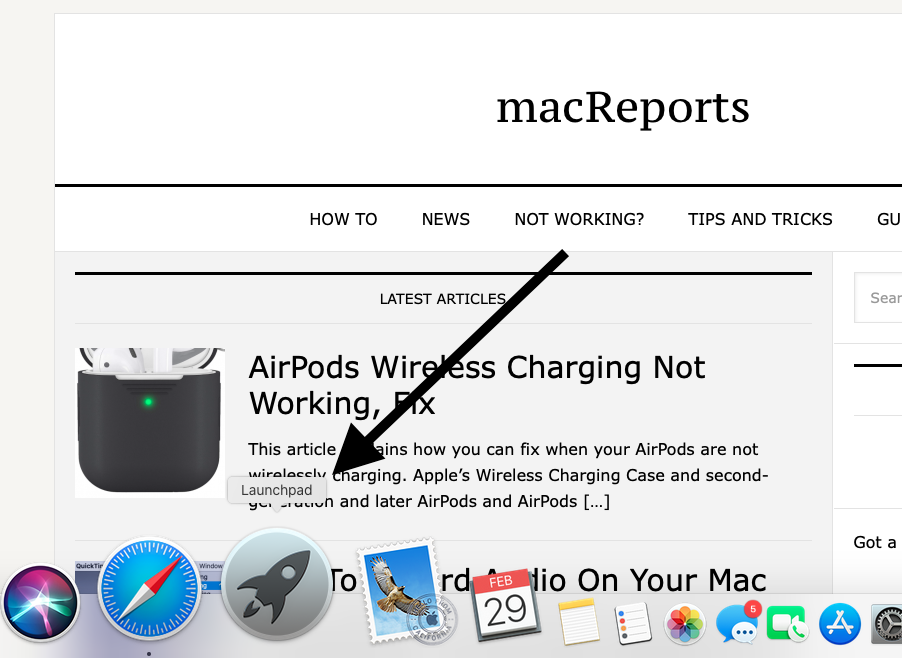
In Launchpad, you can pressing and holding the app's icon to bring up the wiggly app management feature. Like iOS, app icons start to shake in-place, which allows you to move them around. Third-party apps also have a small ‘x’ icon on the top right of the icon in this mode, which allows you to delete them.
Another way to delete apps is from Finder. There, you simply select the app, then right-click and select ‘delete.’ In either Finder or Launchpad, you can drag app icons to the trash bin to delete the apps.
(If you’re on an older version of macOS – or OS X, for the much older versions – and managing apps via iTunes, the process is similar. Select the app, right-click, and select ‘Move to Trash.’)
Remove apps with the Finder
Remember when we told you deleting and uninstalling weren’t the same? Deleting is the first step in the process; Apple wants you to do more work!
The completely uninstall an app, follow the instructions for deleting an app above. Then head to your library folder from Finder:
- Open Finder
- Select ‘Go’ from menu
- Hold down ‘option’ key on keyboard; you should see a new option for ‘Library’
- While holding down the option key, select ‘Library’
Best apps for macbook pro. A word of caution before you proceed: DO NOT delete files if you’re not sure what they do. Apple hides the Library for a reason: most people shouldn’t go poking through it and deleting files haphazardly. If you don’t know what a file or folder is for, leave it alone.
How To Uninstall Apps From MacOS Mojave/Catalina
Library houses files and folders apps need to operate. Sometimes these files or folders are for updating an app, or managing a Safari extension. Again, Library isn’t a toy. Tread lightly!
When you find a file or folder you know doesn’t belong – and is associated with the app you deleted – you can also delete the file by right-clicking and selecting ‘Move to Trash,’ or dragging it to the trash bin.
Deleting these files completes the deletion of an app. It’s possible those files were doing things necessary for the app that you no longer want, like calling a server or tracking keystrokes. Without the app, those types of features are just spyware.
When you’re done deleting apps and associated files, go ahead and empty your trash bin.
If you’re thinking ‘wow, that all seems sort of scary,’ you’re not wrong. Even seasoned pros get nervous when digging into a computer’s Library file system. There is a better way to uninstall programs from Mac, though!
Uninstall Mac apps and delete left behind files
If the idea of deleting apps and digging into secret libraries on your Mac to remove associated files is daunting, we have a better solution.
CleanMyMacX is a best Mac utility that helps manage your apps and files, in addition to a ton of other features. For now, we’ll focus on app management.
In the CleanMyMacX menu is an ‘Applications’ section on the left pane. It has three options: Uninstaller, Updater, and Extensions. Updater lets you manage updates for apps you want to keep, and saves you the trouble of digging through the App Store just to update an app.
Extensions helps you manage Safari browser extensions, Spotlight plugins, Internet Plugins, and Preference Panes. It’s the simplest and most straightforward way to manage the add-ons some apps demand, which aren’t always caught when deleting or uninstalling an app. When you find an extension you don’t want, just select it and click the ‘Remove’ button at the bottom of the window.
To uninstall apps on Mac, go to the ‘Uninstaller’ option with CleanMyMacX. Here you’ll see apps in a variety of categories. There’s the ‘all’ category for – you guessed it – all of the apps on your Mac. There’s also a section named ‘unused,’ which shows you which apps you’re not really using often.
The ‘Leftovers’ section makes Apple’s ‘Library’ look silly. In CleanMyMacX, Leftovers automatically finds the files associates with apps you no longer have. Hovering over the file in a list brings up the ‘Show’ option, which gives you precise info on exactly what app the file is associated with. No more fumbling through Library and guessing!
There’s also a section for 32-bit apps (remember, we talked about that!) which shows every app that’s no longer supported for macOS. If you really enjoy the app, we suggest reaching out to the developer to see if they will be making it a 64-bit app. If not, go ahead and delete it; it just won’t work on your Mac.
When you’re ready to uninstall programs from your Mac, select the app in any menu you see it in and click ‘Uninstall’ at the bottom of the screen. It’s that easy!

Conclusion
The main goal when uninstalling an app from macOS is to get rid of it completely: files, folders, the app – everything. We’ll also note that if you plan on never using the app or service again, it’s best to request the app developer remove your profile entirely. The method for this varies, but the app or service’s website should have the answer you need.
It takes a long time to delete an app the Apple way, and it’s just not worth it. Digging through the Library is scary stuff, and one wrong move can have a ripple effect on your entire system. No thanks!
We prefer CleanMyMacX, which takes care of the heavy lifting of deleting an app, then removing associated files to completely uninstall it. With a few clicks, you completely rid yourself of an app you don’t want.
For mobile users, there’s also AnyTrans, available for iOS and Android. AnyTrans is a macOS app that lets you manage backups, apps on your device, and account or cloud content in a much cleaner interface than Apple or Google provide. It’s easy to use, and available for both Android and iOS.
Best of all, AnyTrans as well as CleanMyMacX are available free as part of a seven day trial of Setapp. In addition to these apps, you get access to dozens of other handy macOS apps!
Meantime, prepare for all the awesome things you can do with Setapp.
Read onSign Up
Adobe Photoshop Elements. Where you can use it: Mac and Windows Why we love it: While not truly a free photo editor, Photoshop Elements does have a free trial, and it’s far and away among the best photo editing software for Mac and Windows.The suite of automated editing tools — including for exposure, color balance, and reducing the effects of camera shake — make short work of the. Apple photo editing app macbook. Verdict: The licensed version of Pixelmator is widely perceived as of the best photo editing apps for Mac from third-party developers.It features an easy-to-navigate interface with a set of basic features that will make your workflow easier. An amazing feature that Pixelmator Pro offers is the naming of layers imported from external files by their content. Make an edit here, see it there. When you make changes on your Mac like editing a photo, marking a Favorite, or adding to an album, they’re kept up to date on your iPhone, your iPad, and iCloud.com. And vice versa — any changes made on your iOS or iPadOS devices are automatically reflected on your Mac. Apple’s Photos app is included for free on all recently released Macs. It does a good job at organizing your photos, but its collection of photo enhancement tools leaves much to be desired. Hopefully, our selection of the best free programs for photo editing on Mac will help you choose the right app to suit all your creative needs.
Drag windows to the corners and Magnet snaps them into quarters. Use side edges to arrange horizontal and vertical halves. Top edge to maximize, bottom makes thirds. Dragging to the top edge maximizes window size on a given screen. Bottom edge creates thirds. Download on the Mac App Store. https://ningate.netlify.app/mac-window-manager-app.html. A Mac window manager software or generally known as window management app is powerful program that helps you resize and organize windows on macOS. It enables macOS to drag and snap windows in a fashion similar to Windows operating system. Main features of the software: 1. Split screen on Mac into multiple sizes and positions by 7 preset window locations 2. Draw the desired size and location for a window by grid 3. Use the keyboard shortcuts to quickly control your window positions 4. Support most apps and keep update all the time 5. Work on a great stability and performance. Window managers help manipulate application windows in order to increase productivity. A good window manager for Mac will allow moving, resizing and rearranging application windows quickly. It will allow customizing how windows are handled, have keyboard shortcuts for performing window manipulations quickly and allow snapping windows to various locations on the desktop with the mouse.